
Introduction
I. Where the Love of the Game Begins
I met Tommy “TJ” Farrell at a recent RunGood tag team event at Borgata in Atlantic City. While our partners were in the action, TJ and I got to talking from the rail, waiting for our turn to jump back in. He was easy to like right away: warm, funny, open, and the kind of person who makes conversation feel effortless. Then, true to form, once we were back at the table, he raised my flop bet while I was trying to chase a hand all the way to showdown. That balance of friendliness and competitiveness felt like a fitting introduction to a young man who has already faced so much.
Farrell is not a poker coach, content creator, or full-time grinder. He is, above all else, a recreational player with a genuine love for the game and a deep appreciation for the communities that form around it. In that sense, this interview is a bit different from many of my past interviews. But that difference is precisely what makes it worthwhile.
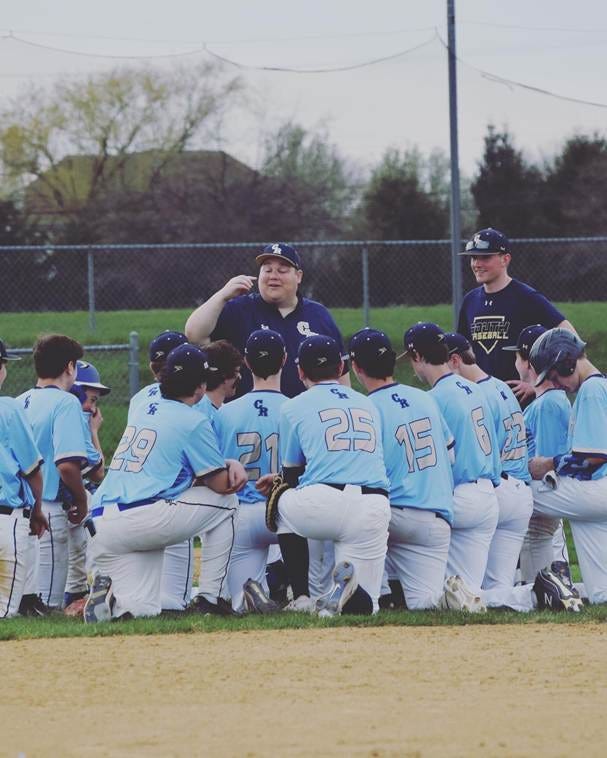
For TJ, poker is not a profession. It is a passion, an outlet, and (at times) a refuge. The game exists alongside another major part of his life: baseball, where he has dedicated himself to coaching and mentoring young players. Both worlds reflect that he is a competitor, yes, but also a connector, someone drawn to challenge, camaraderie, and making the most of the time he has.
TJ’s story has been shaped by profound loss, repeated adversity, and an ongoing fight with cancer. He has lost his mother and both of his brothers. He has faced life-altering diagnoses of his own. Yet what comes through most strongly when he speaks is not self-pity, but perspective. Gratitude. A belief that life is fragile, beautiful, and meant to be lived fully.
This is the story of a man whose relationship to poker is part of a much larger and more meaningful picture. What follows is a conversation with a recreational player whose life experience, resilience, and love of competition make him someone worth getting to know.
1. How did you first get into poker, and what drew you to the game?
I first got into poker when I was about 18 or 19 years old. I had joined a men’s softball league that my uncle and his buddies all played in — the same guys I grew up watching. One day, a couple of them invited me over for a tournament. From that day on, I was hooked.
2. What has kept you coming back to poker through so many different seasons of life?
Poker is like therapy for me, especially when baseball season isn’t going on. Whatever I’m dealing with seems to disappear when I’m at the table.
3. For readers who have never played with you, how would you describe your game and your personality at the table?
I have a hard time describing my own game. If you ask my friends, they’ll tell you I’m kind of nitty. I disagree. I’ve gotten some big bluffs through, and I’ve made some monster calls with ace-high, king-high, and small pairs. I’m definitely not afraid to get it in good with non-nutted hands.
As for my personality, that part is easy. I love having fun at the table. I’m social, I like getting to know people, hearing what they do away from poker, and talking about the tournament series we keep running into each other in. But when it’s time to lock in, I lock in.
4. You seem kind, but also fiercely competitive. Is that an accurate description of you as a player?
That’s perfectly accurate. As much as I love getting to know people, the felt is not a book club or a campfire. You want my chips, and I want yours. Once the dust settles, we can go find a library or a campground, sing “Kumbaya,” and have some friendly banter. It’s never personal, unless you’re just an absolutely miserable and rude person.
5. Do you prefer a home game with friends or playing in a casino, and why?
Truthfully, both.
Casinos are great when you want to play against mostly strangers, although you still get to know a lot of the local players. The bigger tournament series are especially fun because they bring players in from all over. But there are also times when I enjoy the familiarity of a home game, even if everyone knows your tendencies. That’s usually where I try new things and tweak parts of my game.
6. What is one poker memory you will never forget?
Back in January 2015, I made my first final table in a major event that I won a satellite into at Sands Bethlehem, now Wind Creek. It was a $550 main event, and I finished ninth for $6,331.
Since then, I’ve had some other nice scores, including runner-up finishes in Wynn and Venetian series events, but that first major tournament result will always stay with me. And that first big title is still out there waiting for me.
7. Is poker in Philadelphia different than anywhere else?
I don’t think Philadelphia poker is dramatically different from a lot of the rooms I’ve played in across the country, especially compared with New Jersey and Vegas. But one thing I will say is Philly poker has a ton of dawgs in the game, especially in the tournament scene. A lot of them built their skills grinding Philly and Atlantic City rooms.
II. The Losses That Reshaped Everything
Some people talk about perspective as if it is a mindset you can pick up through reading, reflection, or a few hard lessons. For Farrell, perspective was forged much more brutally than that. It came through hospitals, funerals, waiting rooms, surgeries, and the repeated experience of having the people he loved most taken from him far too soon.
8. For readers who may not know your story, can you share some of the adversity you have lived through and how it has shaped you?
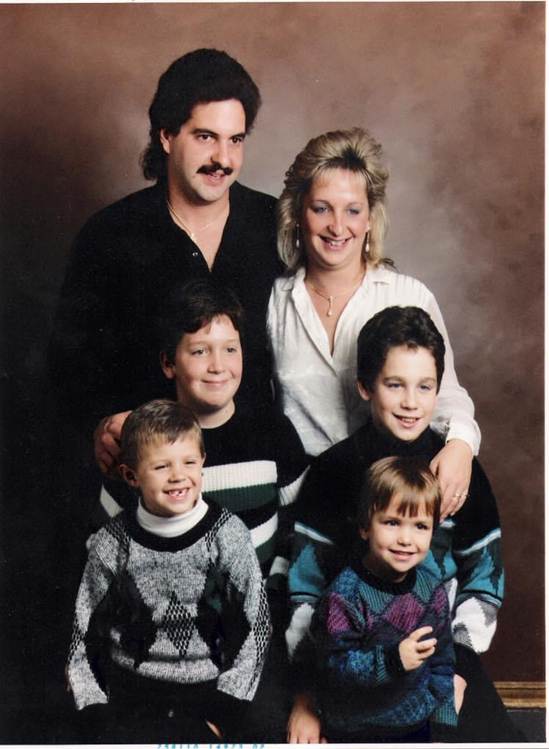
Honestly, the easiest way is probably to lay it out as a timeline.
When I was 14 or 15, I was diagnosed with a pituitary brain tumor. I had surgery in 1995 that was unsuccessful, then another in 1996 that worked, but I lost complete vision in my left eye in the process because they had to cut through my optic nerve to get to the mass.
In 1997, during one of my routine hospital visits, my mom noticed my eight-year-old brother Michael was walking off-balance. They did an MRI and found that he had a type of brain cancer called anaplastic astrocytoma.
In 1998, my mother was diagnosed with breast cancer, and a small piece of my tumor had grown back. The three of us all went through radiation together at the University of Pennsylvania. My brother and I would get treatment, then sit in the lobby while my mom went in for hers.
In 1999, during my senior year of high school, we lost Michael just one month before his tenth birthday.
In 2002, my mother’s cancer came back and had spread to her pancreas and cervix.
In July 2003, my mom took all of us on what I now think of as a life celebration trip to Las Vegas. It was our first time there. While we were out there, my brother Andrew started complaining about hip pain.
A week after we got home, in August 2003, he was diagnosed with acute lymphoblastic leukemia.
On September 20, 2003, my mother joined my little brother in heaven at the age of 40.
On April 18, 2004 — just seven months later — my brother Andrew passed away at 21 and joined my mother and brother in heaven.
Then in May 2023, I was diagnosed with stage 3B colon cancer. I endured six months of chemotherapy and had colon resection surgery.
In December 2025, after two years of clean scans and bloodwork, routine bloodwork showed my tumor markers had skyrocketed. A follow-up CT scan found two masses on my liver. Further testing confirmed it was the same colon cancer that had spread. My world was rocked.
I’m currently going through chemotherapy again. I’ve completed round four of six, and the hope is to shrink the masses enough for surgery and then do six more rounds after that.
That kind of timeline changes a person. It teaches you very quickly what matters, what doesn’t, and how badly you want to keep showing up for life.
9. Your brother and best friend, Andrew Farrell, clearly meant a great deal to you. Can you tell us about who he was and what you still carry with you from that relationship?
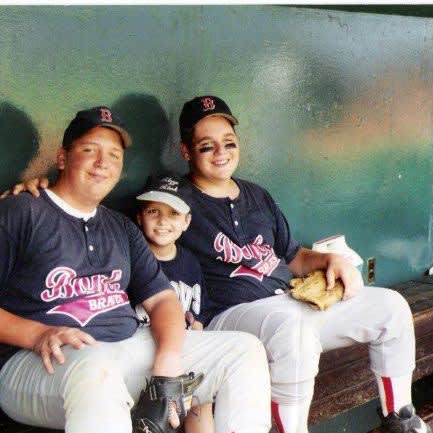
He was my everything — my closest brother, my best friend, my rock.
At every funeral we had to go through together, I remember standing in the family greeting line and looking to my right, and there he was. Tall, steady, always beside me. Then came the day of his funeral. I stood in that same place, looked to my right, and he wasn’t there. He was lying in the casket instead. That broke me.
What I also carry with me is what came after. We had an incredible group of friends, especially baseball teammates, who started a scholarship fund in Andrew’s name that lasted 15 years. We held special events, retired his jersey at our Philadelphia high school, ran an annual Home Run Derby and golf tournament, and donated close to $200,000 to cancer research at Children’s Hospital of Philadelphia (CHOP). They eventually named a consultation room in the new Buerger Center after him.
That’s Andrew. Love, loyalty, brotherhood, and a positive impact.
10. You also lost your mother to cervical cancer and your brother Michael to brain cancer. Does that kind of grief ever feel insurmountable, and if it does, how do you protect your mental health and keep moving forward?
Early on, I developed a never-quit, stay-positive mindset by watching all three of my family members go through incredible difficulties without complaining.
After they passed, that attitude became deeply ingrained in me. I almost feel like complaining would be an insult to them, because they stayed positive and inspired people even in their darkest moments.
When I’m having a bad day, I think about them. More recently, I think about some of the other patients I sit with during chemo. It reminds me that as bad as things may feel, they can always be worse, and for someone else, they often are.
11. What have repeated experiences with loss taught you about gratitude, perspective, and what really matters?
So much.
The things that used to bother me just don’t anymore. The problems that do need attention, I’m able to handle with a lot less stress. My losses taught me that compassion and empathy should be used a whole lot more in life, and that’s something I take a lot of pride in.
III. TJ’s Own Diagnosis, and the Refusal to Waste Time
12. You have also faced cancer yourself. How has that experience changed the way you see life and time?
It has changed everything.
When I was diagnosed the first time, I’ll never forget sitting in the ER waiting for my CT scan results to confirm what I already knew deep down. I was 42 years old, and I had already outlived my entire immediate family except for my dad, whose side of the family is basically the picture of health. I would have been naïve to think I’d be the one person who somehow avoided cancer.
This time, after being upgraded to stage 4 and hearing the diagnosis, something clicked in me. My fear of dying disappeared. My outlook changed completely. I became even more motivated to do what I want to do, especially on impulse, because I want to make sure that if my number gets called, I go with no regrets.
You really do love deeper and live harder.
13. On the hardest days, what keeps you going?
My baseball guys, my family, and my angels.
My baseball guys were one of my biggest motivators for staying active and staying busy through chemotherapy. I didn’t miss a single game all summer because they kept me going. They told me that me being there motivated them and reminded them that the game they love won’t be there forever.
14. Has facing cancer made you appreciate your loved ones and everyday life differently?
Without a shadow of a doubt.
And it goes beyond loved ones. It’s made me more social. I genuinely love hearing people’s stories and meeting new people. Life feels more precious now, and so do the people in it.
15. Is there anything you wish people better understood about living with cancer while still trying to show up fully for life?
The amount of energy chemotherapy takes from you is almost impossible to explain.
It’s a fatigue unlike anything I’ve ever experienced. The closest comparison I can make is running a marathon in 100-plus-degree weather, then collapsing on a couch in a 65-degree room. You’re completely spent. Even staying hydrated becomes a challenge, because a lot of what you put into your body doesn’t stay there for long.
IV. Why Baseball Still Means Everything
Baseball, in TJ’s life, is more than a pastime or profession. It is memory. It is refuge. It is continuity. It is one of the places where grief and love get to coexist in motion.
16. In addition to playing poker, you are also a baseball coach. What does coaching mean to you personally?
Everything. Baseball has always been my escape from reality, dating all the way back to when I was dealing with my own tumor and then later my brothers’ and my mom’s illnesses. We always found ourselves at the field, even during treatment. My little brother and my mom never missed a game.
My brother Andrew and I even chose our jersey numbers in honor of Michael’s battle. I wore 3, he wore 25, for Michael’s March 25 birthday. After Andrew passed, our coach had memorial patches made for everyone’s jerseys the following year.
Once I got into coaching, I brought all of that with me — the life experience, the personality, the positivity — and I try to pass that on to my players.
17. How long have you been coaching, and where have you served?
I’ve been coaching since 2018, and at the high school level since 2020. I also coach with Baseball U Philly, a high-level AAU program that consistently has some of the area’s strongest college commitment numbers.
18. What do you hope your players learn from you beyond the game itself?
I hope they learn to appreciate every day, because tomorrow is never guaranteed.
I want them to appreciate the game too, because for most of them, baseball eventually ends. It becomes a memory. I want them to cherish the brotherhood, the time with teammates, and everything that comes with being part of something bigger than yourself.
19. Have your own experiences with grief and illness shaped the way you lead and mentor young athletes?
Definitely. I try to be a compassionate coach who uses positive reinforcement instead of making a kid feel like one mistake is the end of the world. I’ll pull a player aside, talk it through, and help him reset. If the issue continues, we deal with it differently, but usually it never has to get to that point.
20. What’s a core baseball memory for you, whether as a player or a coach?
As a player, winning city championships with my teammates several years in a row and getting to play at Veterans Stadium multiple times will always mean a lot to me.
As a coach, I’d say my first year at Council Rock South, when we won the freshman tournament. That was a special group with a no-quit attitude, and we fought our tails off to bring that trophy home. It was the first year for all of us there, right after COVID had taken baseball away from everyone, so it meant a lot.
21. If you could never play poker again but could coach without ever worrying about funding or time, or if you could never coach again but could play poker anywhere, anytime, at any stakes, which would you choose?
That may be the toughest question I’ve ever faced, but I’d choose coaching over poker.
I love poker, but I love being an inspiration and a mentor for my guys even more.
V. What Poker Gives Him That Nothing Else Can
For some people, poker is adrenaline. For others, it is math, ego, escape, or obsession. For TJ, it sounds like relief. A mental reset. A place where the noise finally quiets down.
22. How do you stay level-headed in a poker tournament while carrying more internal pressure than most players around you?
That’s an easy one. The internal pressure disappears the second I walk into a poker room. At that point, it becomes Disneyland for me.
23. Has everything you’ve lived through changed the way you handle bad beats, downswings, or disappointment at the table?
Yes, 100%.
I immediately think about how much worse things can be — and are — in real life. At the same time, you’ll never catch me wallowing in self-pity. I did that for about three or four days after I was re-diagnosed, and I made myself a promise that I would never do that again.
24. Has poker ever felt like an escape for you, or is it something more meaningful than that?
It’s the best therapist money can buy. Like baseball, poker makes my worst problems disappear for a while.
25. Are there lessons from baseball that show up in your poker game, or lessons from poker that have made you a better coach?
From baseball to poker, I’d say patience. Especially in tournament poker, you learn to wait and pick your spots.
From poker to baseball, the first thing that comes to mind is something I teach my guys all the time, which is “turn the page.” When I’m coaching on the diamond, I’ll say, “Flush it.” Both basically mean that you have to learn to leave something bad behind you and move onto the next at bat or fielding opportunity, or (as applied to poker) the next hand after a bad beat.
In poker, you lose a hand or make a mistake and you have to move on. Baseball is the same. Bad at-bat? Flush it. Error in the field? Flush it. Move on to the next hand, the next pitch, the next opportunity.
VI. A Life Worth Living
By the end of a conversation with TJ, the title for this piece almost wrote itself. Not because his life has been easy, and certainly not because it has been fair. But because he seems to understand something many people spend a lifetime avoiding: the fact that pain and beauty are not opposites. Often, they are intertwined.
26. What does a life worth living mean to you?
It means living to the absolute fullest. Try new things. Step outside your comfort zone. Tell people you love them, even if it feels weird at first. Leave no doubt in the minds of the people who matter most that they meant everything to you.
27. What do you hope people remember about the way you have carried yourself through hardship?
I hope they find their own inner strength through watching me fight through what I’ve faced. If I can be an inspiration to someone else, that means everything to me.
28. What would you say to someone who is in the middle of grief, illness, or a season of life that feels deeply unfair?
The body may bend, but the mind will never break. A positive mindset can beat anything.
Conclusion
Tommy “TJ” Farrell leaves the kind of impression that deepens, rather than fades, the more you learn about him. At first, you notice the charm, the humor, the kindness, the ease at which it is to talk with him. Then the fuller picture comes into view, and what stands out is something much stronger: a man who has been hit by life again and again, and who has refused to let those blows strip him of joy, softness, or purpose.
That refusal may be the most remarkable thing about him.
TJ is unquestionably tough. You can hear it in the way he talks about cancer, in the way he approaches competition, and in the way he keeps showing up for the young athletes who look to him for guidance. But his toughness has not made him closed off. It has made him more compassionate. More grateful. More intent on loving people while they are here and living hard while he is too.
Poker gives him release. Baseball gives him meaning. Family — both the one he was born into and the one he has built through friendship, coaching, and community — gives him something to carry forward. He is a competitor, yes, but also a caretaker. A fighter, but not a cynic. A man with every excuse to harden, who somehow chose heart instead.
And maybe that is what makes Tommy “TJ” Farrell unforgettable. He is living proof that a life worth living is not one spared from pain. It is one that keeps choosing connection, courage, laughter, and light anyway.
Donate to Rally for TJ Farrell: Beating Cancer Again, organized by Jen Caulkins
Author’s Note: Just prior to publishing, we reached out to TJ who shared the following wonderful news –
“I’ve had some amazing news since we last spoke.
My last scans showed that the tumors have shrunk to half the size they were from the chemotherapy and I was cleared for my surgery!
My prayers came through, and I had surgery back on the 21st. The doctor thinks it was successful.
I still have 68 stitches in my stomach and I have been home for about five days since being released, and I’m getting stronger each and every day!
Follow up scans will be coming in the next couple of weeks along with blood work and we are hoping for a clear report!”
Want to submit a Community Contribution to Railbird Creations?
We welcome essays, reported pieces, opinion columns, and personal stories from the poker and wider gambling community.
Send submissions to: submissions@railbirdcreations.org