
Brigitte Korak, founder of Zone of Excellence , is a high-performance mindset coach and competitive poker player with a background in elite athletics and Olympic-level performance psychology.
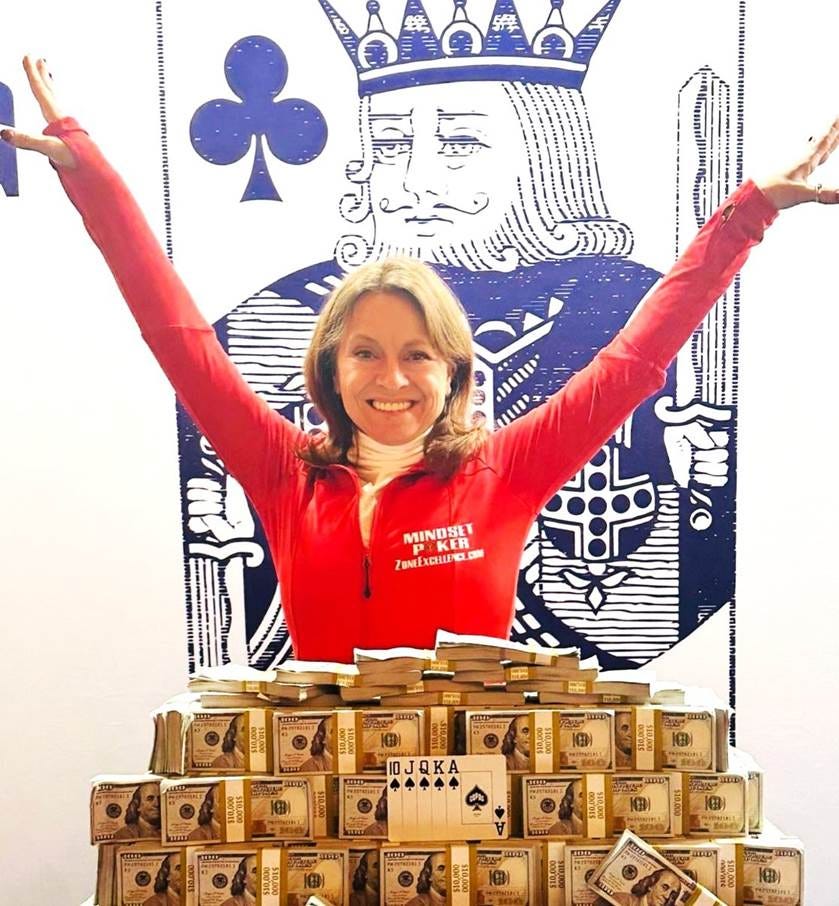
Excellence rarely announces itself loudly. More often, it reveals itself through discipline, restraint, and the willingness to serve something larger than personal results.
Brigitte embodies that quiet mastery. A former world-class athlete who once competed on the global stage, she found in poker the same unforgiving demand for precision, emotional regulation, and decision-making under pressure that defines elite sports. What began as a competitive pursuit quickly evolved into something deeper: a lifelong study of human performance when the stakes are highest.
Today, Brigitte is both a formidable competitor and a trusted mindset coach to elite poker players around the world. She occupies a rare dual role in the poker world. She competes when it matters, but when players she coaches are deep in tournaments, she steps away from her own table without hesitation. Coaching comes first.
In this interview, Brigitte reflects on her transition from elite athletics to high-performance poker, the psychological realities that separate champions from recreational players, and the philosophy behind her play and coaching. For players, leaders, and anyone striving for sustainable excellence, her insights offer a blueprint rooted not in ego, but in preparation, self-trust, and service.
I. Discovery of Poker & Competitive Drive
1. You found poker after a career as a high-level athlete, even competing in world championships. When did it first click for you that poker could satisfy that same competitive drive?
It clicked the moment that I realized that poker demanded the same level of internal precision as high-level gymnastics. In elite sports, you don’t just compete against others; you compete against your own execution, focus, and emotional control. Poker offered that exact same challenge in a different form.
What resonated deeply was that every decision carried real weight. Just like stepping onto the beam or preparing a complex acrobatic sequence, once the moment arrives, there’s no room for hesitation. You either commit fully, or the mistake shows immediately.
Poker became my new mental sport. It became a place where I could bring my athletic drive and mental coaching skills onto the felt — and where everything I knew about psychology suddenly came alive. Poker revealed itself as the ultimate laboratory of human behavior under pressure. When I played in my first tournament, every switch turned on. I knew I was all-in for the ride.
2. You’ve said that after years of top-level athletic performance, your mind still wanted to compete even when your body was telling you that you had reached your physical limits. How did poker meet your competitive needs?
My body has limits that my mind doesn’t have. After years of physical intensity, what remained incredibly alive was the need to engage fully, test myself, stay sharp under pressure, and keep challenging the athlete within me to compete and perform at the highest level.
Poker offered a competitive arena where the body steps back from hard impact, but the nervous system, emotions, and decision-making capacity are pushed to their limits. It allowed me to channel intensity without mortgaging the body. Poker is that special space where discipline, courage, patience, and resilience still mattered just as much.
3. What surprised you most about the mind sport of poker as a competitive discipline compared to physical, traditional sports?
What surprised me the most was how unforgiving the internal game is. In physical sports, effort is visible. In poker, everything happens internally, be it your stress response, self-talk, or relationship with uncertainty and loss.
Poker exposes psychological patterns with unusual speed and clarity. It’s a mirror: how you deal with risk, control, ego, patience, and uncertainty is constantly revealed. That makes it one of the most psychologically revealing competitive environments that I’ve ever experienced.
4. Your work reflects a very strong performance-driven mindset. Where does that inspiration come from?
My upbringing had a lot to do with my mindset. Performance wasn’t something we talked about at home; it was something we lived.
My father was born in Austria and represented his country three times as an athlete in the Deaflympics, the equivalent of the Olympic Games for deaf athletes. What makes it even more inspiring is when he did it. He competed when he was 64 in Melbourne, Australia in 2005), 68 in Chinese Taipei (Taiwan) in 2009, and 72 in Sofia, Bulgaria in 2013). When people ask me where my competitive drive comes from, it’s safe to say my DNA is infused with a certain Olympic-level chemistry.
On the French-Canadian side, my mother is 77 years old and still teaches kindergarten. Passion, patience, and consistency were modeled daily in our household. Between perseverance, commitment, and love for what you do, my model of excellence was shaped exceedingly early — long before I ever sat at a poker table.
II. Transitioning from High-Performance Sports to High-Performance Poker
5. Before poker, you specialized as a mindset coach working with Olympic athletes and world-championship contenders. How did that world prepare you for working with poker players?
Elite sports taught me that performance is rarely about talent alone. It’s about preparation, regulation, and recovery — mentally as much as physically. Working with elite athletes gave me a deep understanding of pressure cycles, fear of failure, over-control, and the fine line between confidence and rigidity. Poker players face the same dynamics, with an added layer: constant uncertainty and delayed feedback. My background allowed me to recognize these patterns immediately and translate elite-performance tools into the poker context — from pre-performance preparation to in-game execution and post-performance recovery, all essential to maintaining a healthy balance.
6. When did poker players first start approaching you for mindset coaching, what did they assume they needed help with versus what they actually needed help with?
Most players initially came saying they needed help “controlling their emotions.” What they actually needed was to understand their internal operating system, the beliefs, identity, and decision rules guiding their play. Players don’t struggle because they feel emotions; they struggle because they fight, judge, or misinterpret them. Once we worked on beliefs, identity, decision-making frameworks, and recovery after loss, emotional regulation became a natural outcome rather than a forced discipline.
7. Where do you see the strongest parallels between elite athletes and elite poker professionals?
I see the strongest parallels in their relationship with pressure and error. Elite performers don’t personalize mistakes; they extract information. They reset quickly, stay present, and continue executing their strategy even when conditions are unfavorable. Both elite athletes and elite poker professionals understand that excellence isn’t about perfection. It’s about staying functional, clear, and grounded when things don’t go your way.
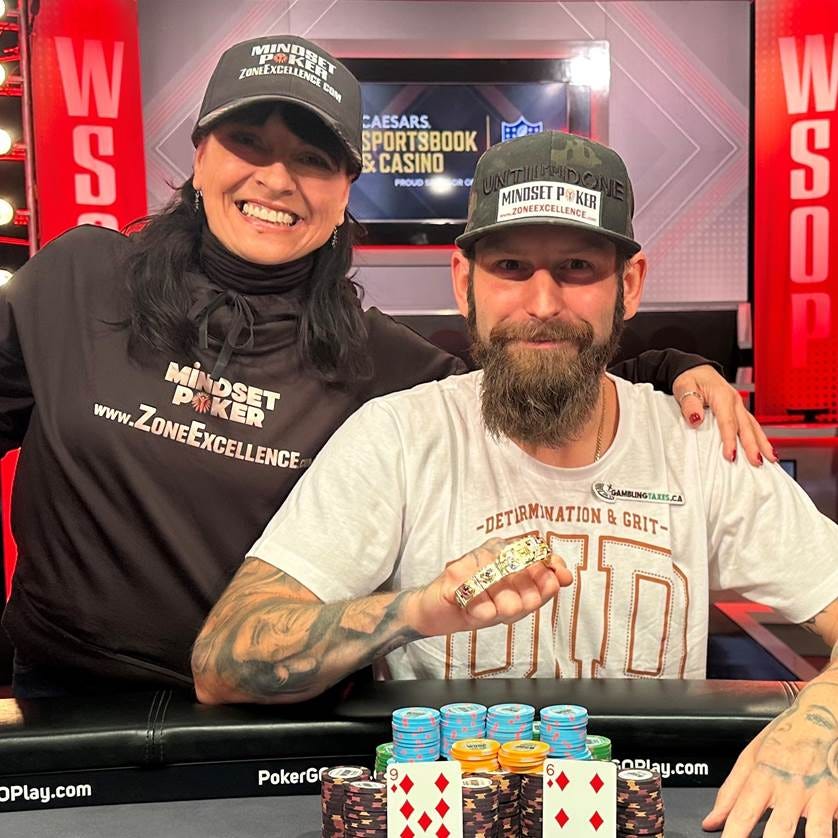
Brigitte Korak pictured with client David Guay, WSOP 2023 Bracelet winner, Event #64
8. Where do you primarily play and coach poker today, and how does that environment support your work?
My home base is the Playground Poker Club in Montreal, Canada, where I’ve been evolving since its opening fifteen years ago. I began as a player and progressively expanded into serving as a mental performance coach for several notable players from that community.
Playground Poker Club was awarded the best poker room in the world, so it’s a privilege to have such a world-class venue so close to home, especially one that hosts major international events like the World Poker Tour and the World Series of Poker Circuit. Over time, my mental performance coaching within the poker industry naturally expanded internationally.
Every year, I go to Las Vegas during the World Series of Poker. I play a few tournaments, but my main role there is coaching. It is so wonderful getting to finally meet the players I usually coach over Zoom in person.
Last summer summed it up perfectly: I was playing the Colossus at Paris when two women I coach were deep with twenty players left in the Ladies Event at Horseshoe. A few times between hands, I’d get up from my own tournament, run to the other venue to check in, offer a few grounding reminders, and then head back to my seat and play my next hand. I became short stacked that first day but managed to finish 452nd out of a massive field of 24,629 players.
So yes, I do play. But coaching always comes first — even if it means multitasking between tables and tournaments!
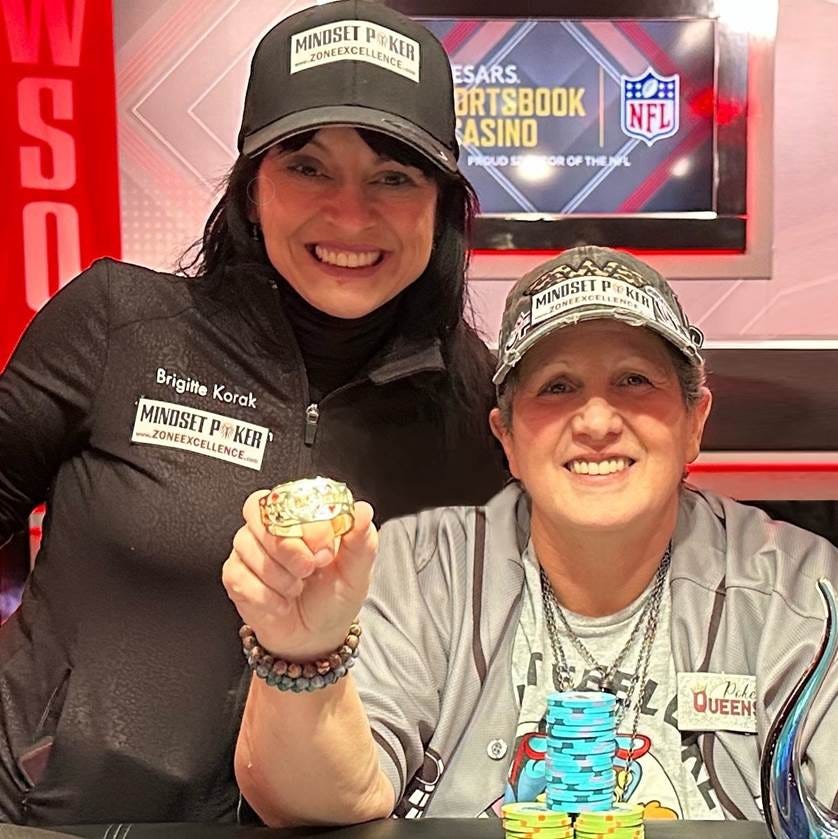
Brigitte Korak pictured with client Tamar Abraham, WSOP 2023 Bracelet winner, Ladies event
III. Mindset, Leadership, and Sustaining Excellence
9. Our readers strive for excellence. As a new CEO building a public-interest nonprofit in the gaming industry, what mindset or leadership advice would you offer me or another new leader directly?
Build inner stability before seeking external influence. Leadership under pressure is less about charisma and more about regulation. When uncertainty increases, the leader who stays centered naturally makes clearer, stronger decisions.
Shortcuts and impatience always show up later. If you skip the discipline of building solid processes, there will come a moment when pressure hits and you will feel it in your core. That is the moment where you either trust yourself or wish you had done the work. True leadership and being a champion are knowing you can count on yourself when the stakes are high.
10. In your experience, what separates leaders who sustain excellence over time from those who burn bright and then out?
Sustainable leaders respect recovery, both mental and emotional. Burnout often comes from confusing intensity with effectiveness. Those who last understand rhythm: when to push, when to step back, and when to recalibrate.
Excellence isn’t maintained by force. It’s maintained by alignment.
11. How do true champions prepare differently from recreational participants, whether on the field or at the poker table?
Champions prepare before pressure shows up. They train their mindset, routines, and recovery processes when things are going well. They do not only train when they’re in crisis.
In poker especially, success isn’t about luck. It’s about preparation. When opportunity appears, champions are ready to capitalize on it. What you put into practice for the result you want to achieve becomes the result.
12. What are the most common mindset mistakes recreational players make that elite performers rarely do?
Recreational players chase outcomes. Elite performers focus on decision quality throughout the process.
The moment someone plays to avoid discomfort or to prove something, performance deteriorates. Elite performers accept discomfort as part of growth; they don’t negotiate with it. My role is to help clients build the internal resources to do exactly that and to flow easily into their “Zone of Excellence.”
IV. Zone Excellence: Framework & Methodology
13. Can you walk us through Zone Excellence’s core philosophy and pillars and how you built it?
Zone Excellence is built on the idea that performance emerges from alignment, not force. It integrates mindset structure, emotional regulation, physiological state, and decision clarity.
I developed it by combining elite sport psychology, Neuro-Linguistic Programming (NLP), hypnosis, emotional intelligence, and years of observing how people behave under real pressure: in competition, leadership, and poker. It’s not about motivation; it’s about coherence between who you are, how you think, and how you act when it matters most.
14. What kinds of clients are the best fit for this work?
Driven individuals who want durability, not shortcuts. People who understand that mastering their inner game is a meaningful investment in themselves, not a quick fix, are the best fit.
My work goes beyond the felt. I help clients strengthen their daily lives, relationships, and professional areas, because inside every Olympic athlete, business leader, or professional poker player, there is a human being. My mission is to help them build internal balance and strength so that when they sit at the table, or they need to perform in other areas, they are confident, grounded, clear, and aligned.
15. When you picture the “perfect client,” what qualities or attitudes do they show up with?
Curiosity, responsibility, and honesty. They’re willing to look at themselves without ego and commit to real internal work. I will take them out of their comfort zone, but that’s where real positive change happens.
16. Have you ever had a coaching relationship that didn’t work out? What did you take from that experience?
Yes, and those situations taught me about the importance of alignment. Transformation isn’t something that can be outsourced. It requires presence, responsibility, and commitment. Coaching, at its best, is a partnership, one where growth emerges through shared engagement and respect.
V. Applying Excellence: From Poker Tables to Everyday Leadership
17. What do you wish more poker players understood about excellence?
Excellence isn’t constant dominance. It’s the ability to recalibrate without self-judgment.
The best players aren’t emotionally numb. They’re emotionally intelligent.
18. What’s the most uplifting transformation you’ve witnessed in a client or yourself?
Seeing someone move from internal chaos to quiet confidence is the best. When performance stops feeling like a fight and becomes an expression of clarity, everything changes.
19. What’s one achievable mindset practice anyone reading this can adopt today to level up their game or their life?
Pause before you decide. Take one conscious breath, one moment of awareness before you act. That pause interrupts emotional reactivity and brings you back into the decision-making process where choices are guided by clarity rather than by the lure of a shiny outcome.
This pause creates space, and in that space resides your Zone of Excellence, where better decisions naturally emerge.
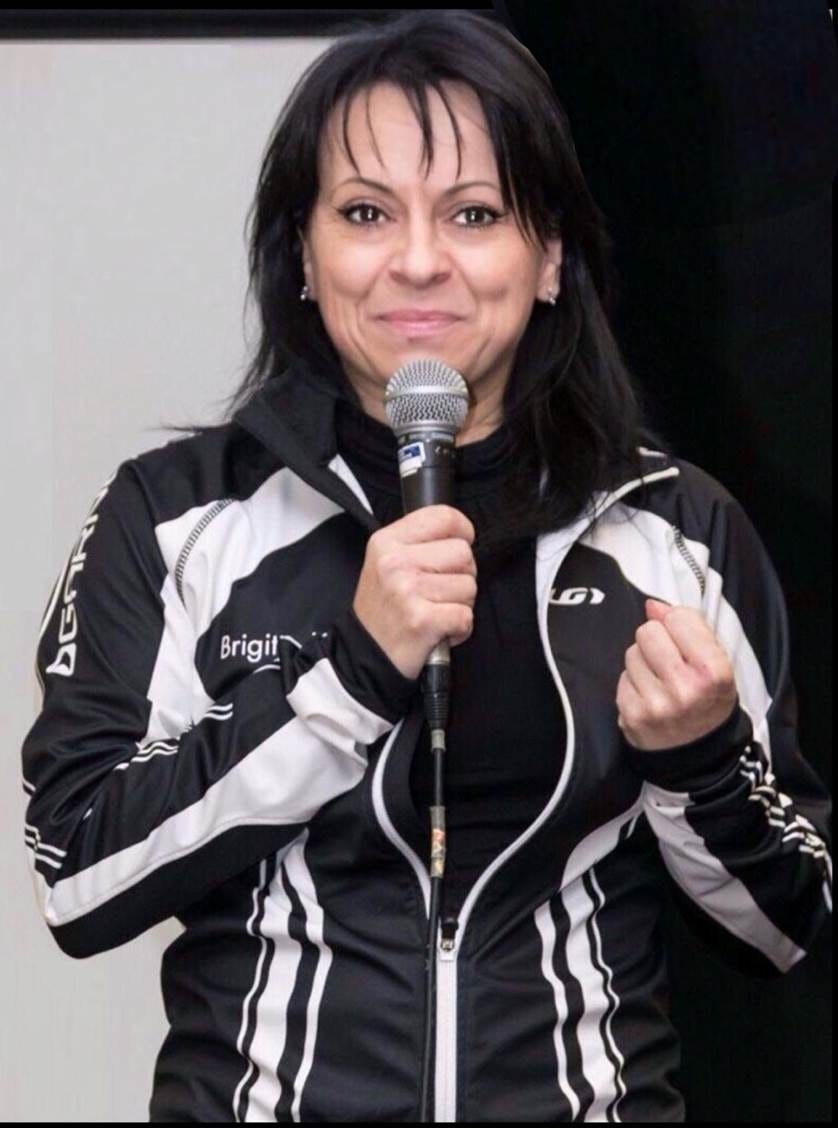
Conclusion
What stands out most in Brigitte Korak’s “Zone of Excellence” approach is not just her understanding of performance but her respect for and commitment to it.
She rejects shortcuts. She resists the illusion that intensity alone produces excellence. Instead, she teaches regulation over reaction and preparation over hope. Whether she is coaching Olympic-caliber athletes, guiding poker professionals through brutal downswings, working with business leaders, or stepping away from her own tournament run to help a client in a defining moment, her priorities are clear.
In a game and a world that often rewards bravado, her work is a reminder that the strongest competitors are rarely the loudest. They are the most prepared. They are the most honest with themselves. When the stakes are highest, they are the ones who can be counted on to show up centered, disciplined, and aligned.
Want to contribute?
We welcome essays, reported pieces, opinion columns, and personal stories.
Email submissions to submissions@railbirdcreations.org for a chance to be featured.