
Introduction
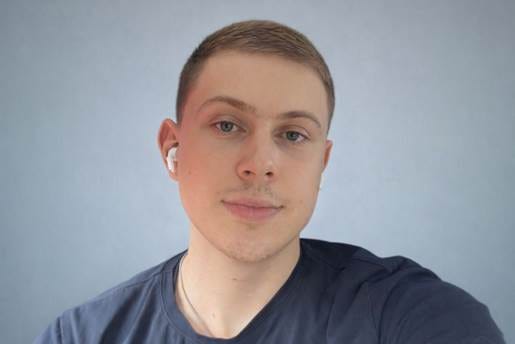
At just 25 years old, Vanja Arp already brings a level of clarity to poker that many players spend years trying to develop. The Germany-based professional cash game player and coach is part of a younger generation shaped not only by ambition, but by study, structure, and a genuine fascination with how the game works.
What stands out about Arp is not just that he plays professionally, coaches students, and contributes strategy content. It is the way he talks about poker: as a system to understand, a skill to sharpen, and a craft that rewards discipline as much as talent. He is thoughtful without sounding rehearsed or preachy, analytical without losing sight of the human side of the game, and clearly energized by the process of improving.
In this conversation, Arp reflects on how poker gradually became his profession, what separates strong players from sustainable winners, how Europe and the U.S. differ culturally at the table, and why theory, emotional balance, and humility all matter more than most people think.
I. Building a Career by Following Curiosity
1. For readers who may be meeting you for the first time, how would you introduce yourself?
My name is Vanja Arp, and I’m 25 years old. I live in Germany, I play cash games both live and online, although right now my main focus is live poker. Alongside playing professionally, I work in coaching and contribute to poker education and strategy content.
2. For being so young, you’ve already built a strong reputation in poker. Did you always imagine a life in this game, or did it develop more gradually?
It definitely developed gradually. What always mattered to me was doing something professionally that I genuinely enjoy. After school, I didn’t want to choose a random degree or career path just because it was expected.
For a long time, I thought about becoming a doctor because I liked the idea of helping people, but eventually I realized that it wasn’t the right fit. I hadn’t found something that truly excited me yet, so I kept exploring, and poker happened to be one of those things that caught my attention.
I realized pretty quickly that poker suits my personality. I enjoy teaching myself difficult things, improving complex skills, and understanding systems deeply. Poker has a strong mathematical and strategic side, and that really pulled me in. The more I learned, the more I enjoyed the process. Over time, it naturally became a career.
3. How did you first get into poker?
Mostly through friends. At first, it was casual. I was just playing a bit with friends and trying it online.
What changed everything was discovering the strategic side of the game. That was the point where poker stopped feeling like just a game and started feeling intellectually exciting.
4. What made you decide to play professionally, and how did you know it was the right move for you?
Poker was simply the thing that fascinated me most. I didn’t have another path that excited me more, and poker challenged me in exactly the ways I enjoyed.
What made me confident in the decision was that I was following something that genuinely interested me instead of doing what other people expected. I think one of the worst feelings in life is regretting the things you never tried. I’m proud that I chose my own direction and committed to it.
Even if I do something different later in life, I’ll still know it was the right decision because I followed what felt true for me.
5. Was there a particular moment when poker started to feel real as a career?
There were two.
The first was when I started traveling to the United States to play. Poker is simply much bigger there than in Europe and being in that environment made it feel much more real as a profession.
The second was when I got my first coaching clients. That was probably the moment it truly became real, because people trusted me with both their money and their development as players.
6. What was your relationship with poker like before you started playing professionally, and how has it changed?
Before I got serious about it, I barely had a relationship with poker. I played occasionally with friends, but that was it.
Like a lot of people, I originally saw poker mostly as gambling. Once I started studying it more deeply, that view changed completely. I realized how much skill, discipline, and strategy are actually involved.
II. Germany, Europe, and What the U.S. Gets Right About Poker
7. What is the poker scene like in Germany right now?
The poker scene in Germany has gotten smaller over the last 10 to 15 years, mainly because online poker has become more difficult due to regulation.
Because of that, a lot of players have moved abroad or started playing elsewhere. During COVID, there was a small resurgence because poker had a temporary boom, but overall the scene still feels smaller than it used to.
That said, I’ve only been in poker for around six or seven years, so I can’t speak from personal experience about the earlier era. That’s just the general impression I have.
8. How would you describe the broader European poker environment compared to the United States?
Poker is simply much bigger in the United States. The game was really popularized there, and it’s much more present in mainstream culture.
In Europe, there are a lot of very strong players, but poker isn’t nearly as widespread among the general public or recreational players as it is in the States.
9. European players sometimes carry a certain reputation in the U.S. Do you think European players are meaningfully different from American players?
That reputation definitely exists, and I understand where it comes from.
A lot of European players who travel to the U.S. are strong players who go there specifically to find good games. On top of that, the U.S. has a much larger player pool overall, which naturally means more recreational players too.
Another important factor is Black Friday. After that, many American players couldn’t keep grinding online, while European players still could. Over time, that probably contributed to Europeans becoming more theory-oriented and technically strong on average.
10. For players who have never traveled for poker, what cultural differences stand out most?
The atmosphere in the U.S. feels more relaxed and social.
Because poker is more widely accepted there as a hobby or recreational activity, the games often feel lighter and less serious. In parts of Europe, the atmosphere can feel more competitive and tense.
III. Language, Learning, and Staying Grounded
11. How many languages do you speak?
German is my native language, and I’m fluent in English. I also learned some French in school.
12. Has being multilingual helped you in poker?
Definitely. Poker is an international game, and so much of the coaching, communication, travel, and learning happens in English.
Being comfortable in English has helped me a lot with coaching, networking, and learning from players around the world.
13. Do language and culture affect how players think about the game?
I think culture can influence certain tendencies. For example, the stereotypical German player is often seen as disciplined and a bit tight, which lines up with broader cultural stereotypes.
Of course, you shouldn’t take those ideas too seriously, but sometimes you do notice small patterns in how players from different places approach the game.
14. Poker can be emotionally demanding. What helps keep you grounded through the swings?
Poker can definitely be emotionally demanding.
What helps me most is doing real mental game work. I try to understand my emotions better, process them in a healthy way, and accept the things I can’t control.
Sport, meditation, and talking with people I trust all help a lot too. I also think it’s extremely important to have a life outside poker. You need to have friends, family, hobbies, and physical movement. All of it is important.
If poker becomes your entire identity, every downswing hits much harder. That can be really dangerous mentally.
Good bankroll management helps too. When your bankroll is where it should be, downswings are much easier to handle psychologically.
IV. Deep-Stack Cash Games, Theory, and the Discipline to Adjust Carefully
15. What formats and stakes do you enjoy playing most?
I exclusively play cash games. Deep-stack cash game poker fascinates me the most because it creates very complex strategic situations.
16. How would you describe your playing style?
My style has changed a lot over time.
In general, stronger players tend to be more aggressive. Earlier in my career, I probably went through the common phase of being too aggressive. Now I’d say my approach is more structured.
17. What part of the game do you think you understand especially well?
I’d say the theoretical side of poker.
Very early in my career, I started studying with solvers and working with coaches, and that gave me a deeper understanding of the strategic foundations of the game.
18. What part of poker are you still actively trying to improve?
I’m currently focused on bringing even more structure to my decision-making and avoiding the temptation to over-adjust based on small reads.
That’s a mistake a lot of players make, including me earlier in my career. A principle I find really useful is this: small reads should lead to small adjustments, and big reads justify big deviations.
19. What is one misconception recreational players often have about professionals?
A lot of recreational players think professionals almost never make mistakes.
In reality, pros make mistakes all the time. Even very strong players have leaks and are constantly trying to improve. Poker is just too complex for anyone to play perfectly.
20. What separates talented players from those who actually succeed financially long-term?
Consistency. The players who last usually have strong discipline: bankroll management, study habits, emotional control, and the humility to learn from better players.
Ego is one of the biggest obstacles in poker. The people who succeed long-term are usually the ones who are willing to work hard, take criticism, and keep improving.
V. Coaching, BBZ, and Teaching Players to Think More Clearly
21. What is your approach as a coach?
My goal is to help players understand the game on a deeper level rather than just memorize solver outputs.
I also think the theory-versus-exploit debate is often overstated. Theory helps us understand the structure of the game, and from that foundation we can make better exploitative decisions.
22. What are the most common leaks you see in students?
Two things stand out most.
First, many players don’t have a structured understanding of the game and are missing important fundamentals. Second, even when they learn good concepts, they often struggle to apply them consistently in real play.
There really aren’t any secret shortcuts in poker. Improvement comes from steady work and actually implementing what you learn.
23. What is BBZ, and what do you do there?
BBZ is a poker training platform focused on coaching and educational content. I work with them and am currently developing a cash game course for the platform.
24. You also coach for GTO Wizard. How did that come about?
I was very active in the GTO Wizard Discord community for a long time, and through that I connected with Tombos, who is the head coach there.
At first, I started contributing articles and joined strategy discussions, and over time that developed into coaching work with the team.
Working with GTO Wizard has been a great experience. It’s an extremely professional organization; they do amazing work, and I’m looking forward to building a long relationship with them.
25. You mentioned another project you’re working on. Can you tell us more about it?
One of my main current projects is developing a cash game course for BBZ.
A lot of the courses I bought myself in the past were incomplete or just not very good. I want to change that. I want to build something people can actually use to crush live cash games.
I can’t share too many details yet, but it’s something I’m very excited about.
VI. Community, Joey Ingram, and What Comes Next
26. What made you decide to join Twitter/X?
I like sharing ideas and building my own presence within the poker community. Social media is a great way to connect with other players and hopefully help people improve.
27. What has it been like working with Joey Ingram?
I met Joey through GTO Wizard, and working with him has been great so far.
He’s very passionate about poker and the community around it, and collaborating with him and helping out has been a lot of fun.
28. What are your goals for the future, both on and off the felt?
In poker, I’d love to keep moving up in stakes as my bankroll grows and continue improving as a player.
Over time, I’d also like to become even more established in the coaching world and build something of my own. Helping players improve is something I really enjoy, and I want to keep expanding that side of my work.
On a personal level, I’d eventually like to start a family and create a life that gives me both freedom and fulfillment.
Conclusion
What makes Vanja Arp interesting is not just that he is young, successful, and clearly technically sharp. It is that he seems to understand, earlier than many players do, that poker is bigger than talent alone. It is structure. It is discipline. It is emotional control. It is humility. It is the ability to study deeply, communicate clearly, and keep evolving without becoming arrogant about what you know.
That mindset shows up throughout his answers. Arp speaks with the precision of a coach, the curiosity of a student, and the steady ambition of someone who knows poker is not conquered all at once. Whether he is talking about theory, travel, bankroll management, or building better educational tools for other players, there is a clear throughline: he loves the game, and he takes the work seriously.
Want to submit a Community Contribution to Railbird Creations?
We welcome essays, reported pieces, opinion columns, and personal stories from the poker and wider gambling community.
Send submissions to: submissions@railbirdcreations.org